


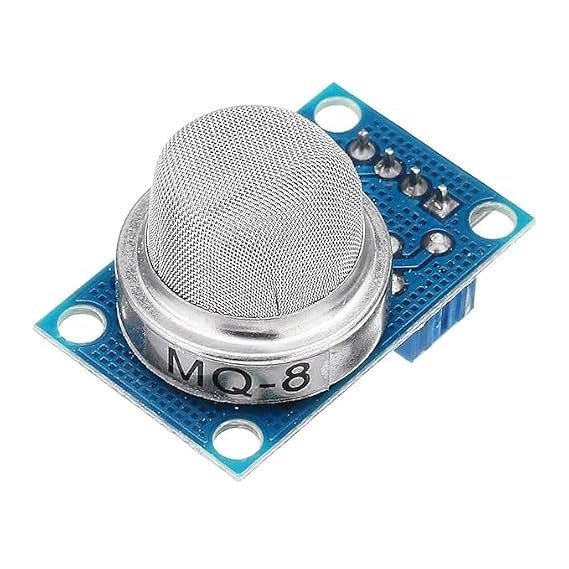
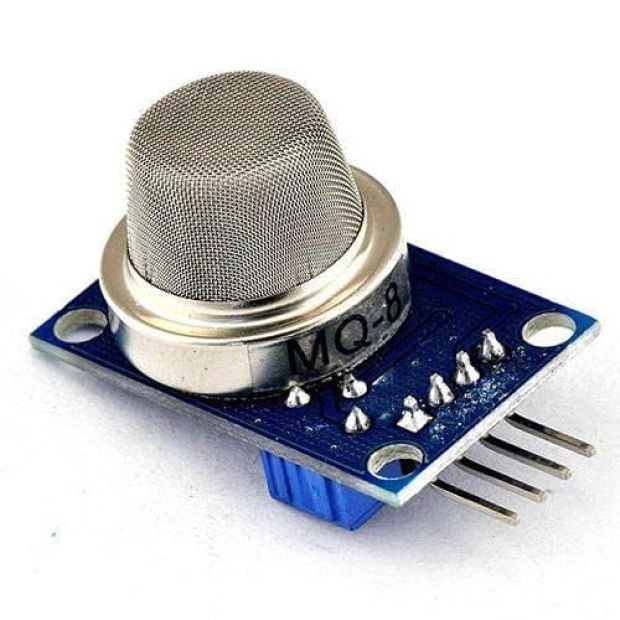
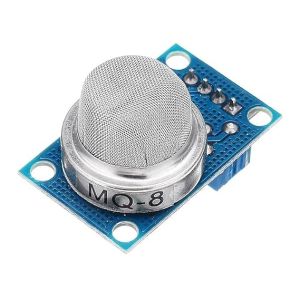
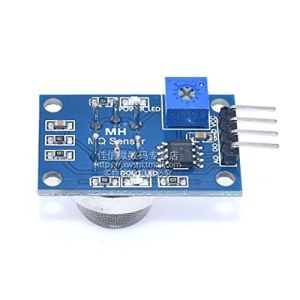
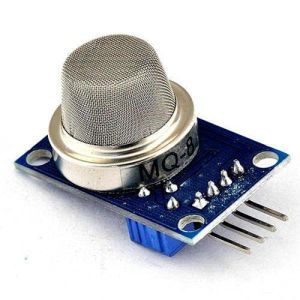
MQ-8 Hydrogen (H2) Gas Sensor Leak Detector Alarm Module with Digital/Analog Outputs
Detect hydrogen leaks instantly with the highly responsive MQ-8 Hydrogen (H2) Gas Sensor Detection Module. Built with a specialized Tin Dioxide ($SnO_2$) sensing layer and an integrated aging heater, this module accurately tracks hydrogen gas concentrations from 100 ppm to 10,000 ppm. Featuring dual outputs—a granular analog voltage rail for precise telemetry and an adjustable digital trigger pin for driving emergency buzzers—it integrates seamlessly with Arduino, ESP32, and Raspberry Pi networks. It is the premier choice for monitoring battery charging rooms, solar hydrogen generators, industrial gas plants, and DIY safety alarm systems.
₹ 105
₹ 165


Detailed Description
The MQ-8 Hydrogen (H2) Gas Sensor Alarm Detection Module is a critical safety component designed to monitor hydrogen levels and provide early warning of leaks. Hydrogen is a foundational element in modern clean energy and industrial manufacturing. However, because it is colorless, odorless, and highly flammable even at low concentrations in ambient air, reliable electronic monitoring is essential. The MQ-8 module uses a specialized Tin Dioxide (SnO_2) semiconductor grid that changes its electrical conductivity when it interacts with hydrogen molecules, providing immediate tracking and warning long before explosive thresholds are reached.
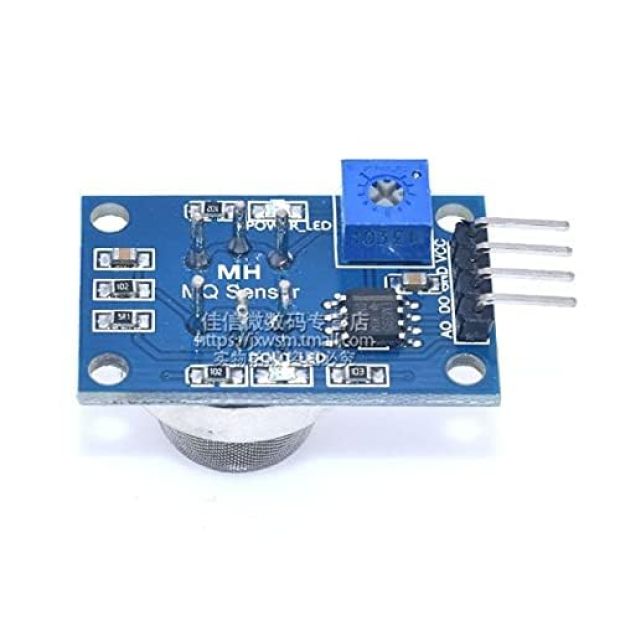
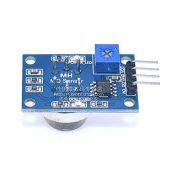
In clean, fresh air, the sensor's conductivity remains low. When hydrogen gas is introduced into the testing environment, it interacts with oxygen ions on the heated SnO_2 surface, lowering the sensor's internal resistance. The board uses a dual-comparator layout to convert this change in resistance into two distinct signal paths: a granular analog voltage rail (A0) that rises and falls with gas concentration, and a TTL digital switch (D0). An onboard multi-turn precision potentiometer lets you set a specific digital threshold, allowing the module to act as a standalone safety switch that can directly trigger an emergency alarm or exhaust fan when gas levels spike.
Key Features and Benefits
-
Broad Detection Spectrum: Accurately measures hydrogen gas concentrations across a wide range, from a minor 100 ppm up to a heavy 10,000 ppm threshold.
-
Low Cross-Sensitivity: Specially optimized to respond strongly to Hydrogen ($H_2$) while minimizing false alarms from alcohol, LPG, carbon monoxide, or cooking smoke.
-
Dual Output Architecture: Provides both an analog voltage pin for detailed level tracking and a digital trigger pin for fast, reactive safety cuts.
-
Onboard Sensitivity Calibration: Populated with an accessible multi-turn cermet potentiometer for setting precise digital alarm thresholds.
-
Pre-Assembled Plug-and-Play Footprint: Built on a standard 4-pin breakout board, allowing for quick integration into prototyping breadboards and custom project enclosures.
Technical Specifications
| Feature Component | Specification Details |
| Core Sensor Model | MQ-8 (Metal-Oxide Semiconductor Gas Array) |
| Target Gas Type | Hydrogen Gas (H_2) Exclusively |
| Detection Concentration Scope | 100 ppm to 10,000 ppm (Parts Per Million) |
| Logic Supply Voltage Window | 5.0V ± 0.1V DC (Requires clean regulated input) |
| Internal Heater Resistance | 31 Ω ± 3 Ω (At room temperature parameters) |
| Heater Power Consumption | ≤ 900mW (Continuous thermal current loop draw) |
| Onboard Driving Chipset | LM393 Dual Differential Hardware Comparator IC |
| Output Communication Profile | Analog Voltage (0.1V to 4.5V) | Digital TTL Switch (0V / 5V) |
| Environmental Operations | Temperature: -10° C to +50° C | Humidity: ≤ 95% RH |
How to Configure & Wire
⚠️ CRITICAL SENSOR PRE-HEATING MANDATE: MQ-series gas sensors rely on an internal heating element to activate their metal-oxide chemistry. When powering up a brand-new sensor for the first time, you must let it run continuously for 24 to 48 hours (Burn-In Phase) to stabilize the readings. For everyday use, allow the sensor to warm up for 60 to 90 seconds before trusting its data. The module will feel warm to the touch during operation—this is perfectly normal and required for proper functioning.
Module Pinout Identification:
-
VCC: Power supply input ($+5 ext{V DC}$ strict regulated rail).
-
GND: Common system ground reference.
-
D0: TTL Digital Output pin (Pulls LOW when the gas concentration exceeds your potentiometer setpoint).
-
A0: Analog Voltage Output pin (Outputs a shifting voltage curve directly proportional to local gas intensity).
Quick Calibration Steps:
-
Connect VCC to a stable 5V rail and GND to your system ground.
-
Connect the A0 pin to an analog input on your microcontroller (e.g., Arduino A0).
-
Power up the system and wait 2 minutes for the internal heater to reach stable operating temperature.
-
Setting the Digital Alarm Switch: If you want to use the digital trigger without writing complex code, place the sensor in fresh air and turn the blue potentiometer screw until the onboard digital status LED just turns off. Next, expose the sensor to a known hydrogen source (such as the gas emitted from a butane lighter without igniting the flame); the status LED will light up instantly, indicating a successful trigger.
Applications
-
Battery Charging Room Monitors: Detects hazardous hydrogen outgassing during high-current charging cycles in lead-acid forklift battery banks and telecom backup spaces.
-
Solar Hydrogen Storage Management: Monitors fittings, valves, and transport lines around DIY water electrolysis rigs and solar gas storage tanks for leaks.
-
Industrial Smart Gas Alarms: Serves as a low-cost, distributed backup safety sensor inside chemical labs, welding shops, and industrial gas distribution hubs.
-
Automated Ventilation Controls: Triggers emergency exhaust fans automatically when hydrogen levels rise, preventing the gas from reaching explosive concentrations.
Package Includes
-
1 x MQ-8 Hydrogen (H2) Gas Sensor Alarm Detection Module
Shipping & Delivery
-
Free shipping on orders above ₹999 across India
-
Dispatched within 1-3 business days
-
Expected delivery: 3-7 business days depending on location
-
Secure packaging to ensure safe transit of electronic components
0 Reviews For this Product

Related Products